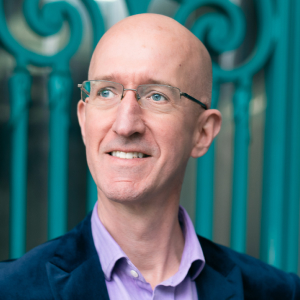
Janette Weir shares a decade of insights from people making real retirement decisions
It’s been 10 years since pension freedoms arrived. In that time, Janette Weir, founding director of Ignition House, has been following the same group of people as they navigate their way through retirement. The study, ‘New Choices, Big Decisions’, is sponsored by People’s Pension. It’s one of the only private-sector longitudinal studies of its kind.
At our recent Wednesday Wisdom webinar, Janette shared her 10 key findings from 10 years of research. She also brought along audio clips from participants, so we could hear directly from the people living through this. Here are some of the standout takeaways.
Behaviour hasn’t changed in a decade
The first finding is the most striking. Despite 10 years of policy, communications and product development, people are doing the same things today that they were doing in 2015. The new cohort of 25 people recruited for this latest wave showed the same patterns as the originals.
Janette sees this as both good news and bad news. Bad, because the industry hasn’t shifted the dial. But good, because it means that if we build propositions based on a deep understanding of how people actually behave, those propositions should last.
“People are people, and we don’t, as humans, change that quickly,” Janette said. “We have inherent biases that are fixed into the way that we think… and we’re not going to change it in 10 years.”
Retirement is emotional, not rational
People don’t retire because they’ve done the sums. They retire because they’re fed up with working, their partner retired, they were made redundant or because they’ve paid off the mortgage and feel free.
The study found that almost none of the triggers for retirement were financial. And many were completely outside people’s control, like redundancy or ill health.
What’s more, life keeps changing well into people’s 70s. In Janette’s cohort, people were getting cancer diagnoses, caring for partners who’d had strokes, forming new relationships, and (in one memorable case) putting the house on the market to move to Spain without his wife.
“Flexibility and adapting to these sorts of things is going to be absolutely key,” Janette said. “The person who thought they were going to be spending lots of money going away on holiday, and then his wife’s had a stroke, and he’s the carer” – and so they find they’re unable to travel anymore.
People don’t understand the risks of getting older
It’s well documented that people underestimate how long they’ll live. But Janette also tested people’s understanding of cognitive decline.
She showed participants a chart plotting actual memory scores against what people think they scored. The gap widens sharply from the age of 70. People think they’re doing better than they are.
This has real consequences. One of Janette’s original participants was an enthusiastic self-investor with a SIPP. He managed it confidently for years. But in his mid-70s, after a prostate cancer diagnosis, he told Janette: “I just don’t know if I can do this anymore. I don’t know if I want to take the risk on for my family.”
His wife had very little pension of her own. He was worried about what would happen to the money if he died, or if his ability to manage it declined.
There’s another risk that almost nobody plans for: what happens when one partner dies. In many couples, the pension wealth sits with one person, usually the man. If he bought a single-life annuity (and most annuities sold have been single-life), the income stops when he dies. The surviving partner loses that income on top of one state pension. The people Janette has spoken to who’ve been through this are in a “pretty dire place”.
Tax-free cash is spent the same way every time
Everyone knows about the 25% tax-free cash. And everyone spends it on the same things: cars, holidays, paying off the mortgage, home renovations, treating the family. Janette said she could “almost play tax-free cash bingo” with each new interview.
People fall into two groups: those who have a specific thing they want to fund, like moving house, and those who describe themselves as spenders. Money burns a hole in their pocket. The tax-free cash scratches an itch.
Most people take it early, well before they retire. Around 60% to 65% access it at age 55, 56 or 57. They don’t see it as a retirement decision at all – they see it as convenient cash.
The implication for any flex-first, fix-later proposition is clear. By the time people are actually retiring and need income, the 25% is probably gone.
Some participants regretted it. One said: “If I was honest, I wish I had not spent it or not taken it out, because I’ve got 3 small pensions… and if I had left it in, I would have had more money coming in as a pension in my old age, when I’d probably need the money more.”
People think annuities are a gamble
The industry sees annuities as security. The people Janette spoke to see them as a gamble. That’s the word they use, again and again.
The fear is dying early and losing the money. “If you were to die within one year of getting your annuity, then it’s a waste,” one participant said. Others talked about losing control, being locked in, and gambling on their future health.
This hasn’t changed over 10 years. People who didn’t like annuities in 2015 still don’t like them now. And the bad publicity from years past still shapes how people feel about them.
This creates a real problem for the flex-first, fix-later concept, which relies on people eventually being willing to convert some of their pot into a guaranteed income. If the word ‘annuity’ triggers an allergic reaction, that transition needs careful handling.
Drawdown is seen as a one-off decision
People who go into drawdown and set up a regular income tend to treat it as set and forget. They don’t revisit it when markets go up or down, review their withdrawal rate or check what they’re paying in charges. “It’s a set-and-done approach,” Janette said. “The leopard doesn’t really change its spots. If people have been good at planning all the way through, then they’re good at planning in retirement. But if they’ve not done very much all the way through, they don’t suddenly change into a financial planner.”
Many people set their withdrawal amount based on need (how much do I need to live on?) or a rough rule of thumb (divide the pot by 20 or 25 years). Some just take money out ad hoc for holidays and treats. Almost nobody is aware that they could still buy an annuity later using their drawdown pot.
Communications aren’t working
After a decade, Janette isn’t seeing any improvement in people’s understanding of their options. Wake-up packs go unread or are quickly forgotten. People find them confusing. And they don’t arrive at the right time.
“Pensions are a minefield” is the phrase Janette hears most. She said that if she had a pound for every time someone said it, she’d have retired by now.
She made an important distinction between engagement and ownership. The industry focuses on trying to drive engagement, sending communications at times that suit the provider, hoping people will seek out the right information. That isn’t working.
What’s needed is a shift towards ownership. Getting people to feel an emotional connection with their pension. And that can’t be one-size-fits-all. Messages about running out of money land completely differently with spenders and savers. Spenders don’t care. Savers panic, and may end up spending less than they should.
Meanwhile, people are already filling the gap themselves. On Facebook and elsewhere, social media communities like ‘Epic Retirement’ are growing. And AI is starting to play a role. “I’d love to do a project where I show people the power of AI,” Janette said. “You put something simple in, I’ve got 100 grand, what should I do with it? I’m in a couple, and it comes out with a fairly reasonable plan.”
But AI can’t do the emotional side. People want validation from someone they trust. They want to be told: this is a good enough pathway for you. That’s where defaults and provider-led propositions like flex-first, fix-later could help, if they’re designed with real people in mind.
Show people income, not pot size
During the Q&A, Richard Smith made a point that cut through. The pension dashboard will show people their projected income, not their pot size. That’s going to be a shock.
“Show people 100 grand, they think they’re rich,” he said. “Show people 5 grand a year, they think, hmm.”
Right now, most DC providers prefer to show the big number. Income projections are less flattering. But they’re more honest. And Janette’s research backs this up. When she shows people what their pot will actually generate as an income, the room goes quiet.
“It can go one of two ways,” she said. “People go, well, that’s just not gonna suit my lifestyle, it’s too little money. Or they think, I’d really like this, how can I make this low income work?”
Care costs are the elephant in the room
Debora Price asked about care costs. It’s a question the industry struggles with, and so do the people in the research.
They know it’s coming. They’ve seen it happen to their parents. They know how expensive it is. They just don’t want to think about it for themselves.
“We as an industry don’t want to ask them about it,” Janette said. “And even people who have IFA relationships, it’s not really a topic of conversation yet. And I say yet, and these people are in their 60s and 70s.”
She added that for most people in this cohort, pension savings won’t come close to covering care costs. The answer is more likely to involve equity release or even selling the home. But nobody’s having that conversation either.
And it’s not just care. Janette found that 30% of people aged 60 to 75 don’t have a will.
Build for people who aren’t like us
Janette’s closing message was direct. The general population isn’t like the people who work in pensions. “We’re all savers,” she said. “The population isn’t.”
She urged the industry to put itself in the shoes of people who can’t hold on to money. People who don’t think rationally about pensions. People who see their tax-free cash as a windfall. People who’d rather get tips from a friend or an AI chatbot than read a wake-up pack.
“They’re out there, and they’re real, and they’re significant,” she said. “And we have to build our solutions, not for us, but for them.”